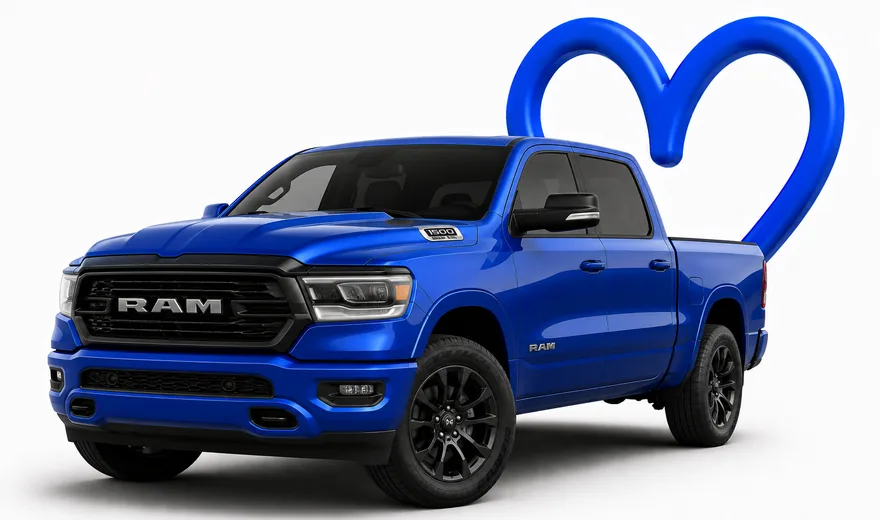
PickupsPersonal truck or working truck?
Half the trucks we quote do some kind of work, and owners rarely think of it as commercial use. Hauling your own materials to your own job is one thing; hauling anyone else’s for money is another, and so is a truck registered to a company.
It takes one question to sort out, and getting it right is the difference between a paid claim and a fight.
FinancingIf it is financed or leased, you have less choice
A lender does not care what you think about deductibles. While there is a loan or a lease on a Ram, they will require collision and comprehensive, they will want to be listed on the policy, and if you drop the coverage they can buy it for you and add it to what you owe — usually at a price nobody would choose.
The part worth asking about is the gap between what you owe and what the vehicle is worth. That difference is yours unless something covers it, and it is at its widest in the first couple of years.
TheftTheft, and what it does to comprehensive
Theft risk is rated on the specific model and year, not the brand, and it moves. A model can go from unremarkable to widely targeted within a couple of years, and carriers react faster than owners do.
If your Ram is on a commonly targeted list, two things are worth doing: ask whether any manufacturer anti-theft update applies to your vehicle, and ask your carrier whether having it done changes anything. Sometimes it does.
About the brandWho makes Ram, and why it barely matters
Ram is part of Stellantis, American in origin. Ram was split out of Dodge as its own truck brand in 2009, so an older pickup may still be titled as a Dodge.
Corporate ownership is interesting and almost irrelevant to your policy. Carriers rate the vehicle in your driveway — its year, its trim, what it costs to repair — not the group that owns the badge. Most of what ram sells here is a pickup, which shapes a quote far more than the parent company does.